Latin America·Brazil
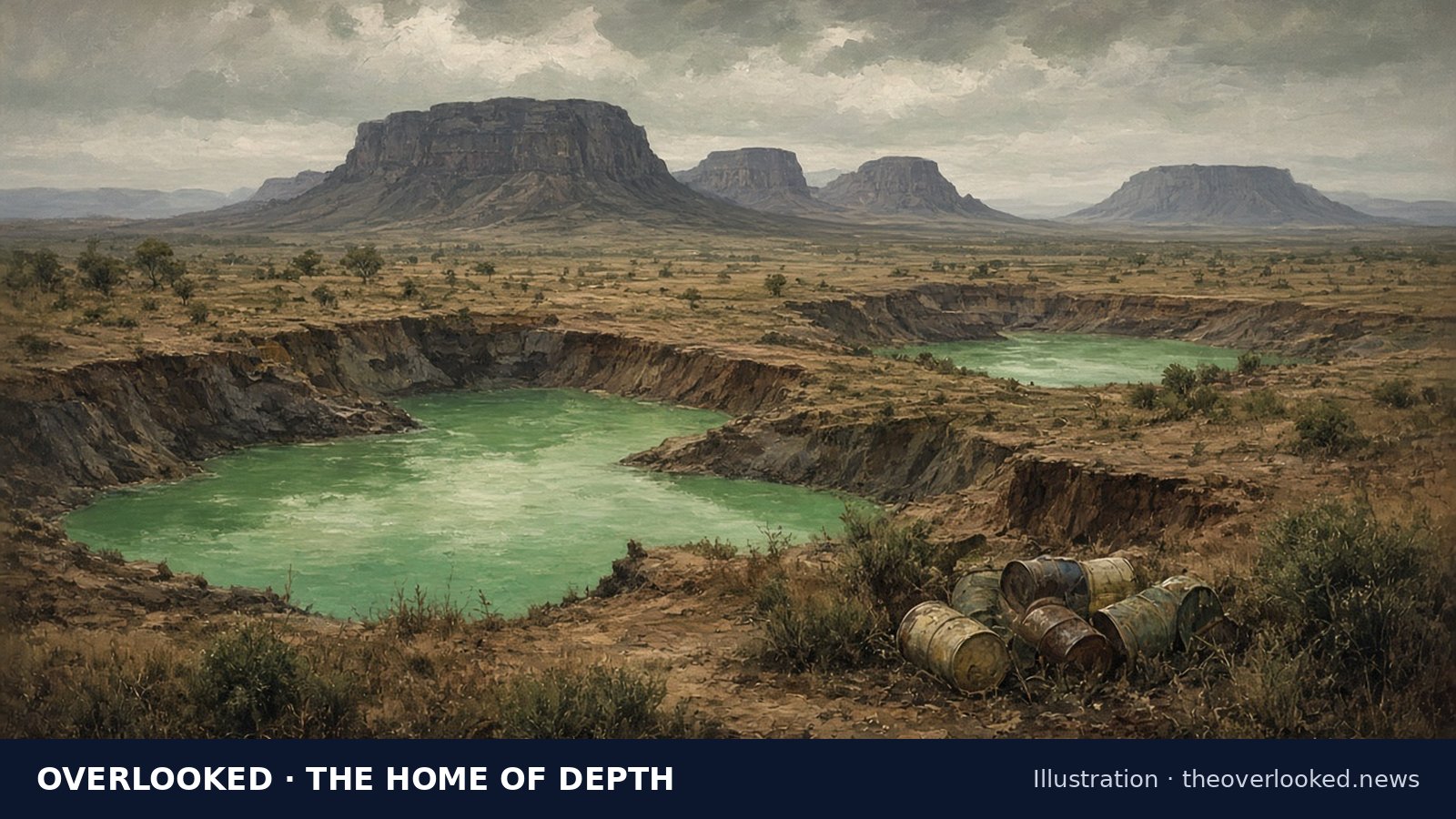
Illegal gold miners leave cyanide ponds in Brazil's Raposa Serra do Sol Indigenous territory, with no cleanup estimate
BOA VISTA, Brazil —
| Score | Meaning | Major U.S. outlets that covered it |
|---|---|---|
| 10 | Fully overlooked ← this story | 0 of 13 outlets |
| 8 | Barely covered | 1 outlet |
| 6, 5 | Lightly covered | 2 outlets (6) · 3 outlets (5) |
| 4, 3 | Covered | 4 outlets (4) · 5 outlets (3) |
| 2, 1, 0 | Widely covered | 6–7 outlets (2) · 8–10 outlets (1) · 11–13 outlets (0) |
Provisional: Google News (5 term variants for AP, Reuters and The Washington Post; 3 for the others) and Bing News (5 variants, outlet domain only) were both used. AP, Reuters and CBS News block direct site search, and the other 10 outlets’ site search only loads in a live browser. A single search engine can miss articles, so this score may go down on recheck.
Depth
Dig five layers into this story — from what happened to the full picture.
L1What happened
As mercury became more expensive on the black market, up to 30,000 reais ($6,000) for a 1.5-liter bottle, cyanide became a cheaper alternative; it can kill humans and animals by cellular asphyxiation within minutes, according to Fiocruz's Cesteh (Mongabay).
L2Who’s affected
In July, federal police arrested two men with about 375 kg of a compound consistent with cyanide and 1,250 kg of activated charcoal (Mongabay; g1). The territory, recognized in 2005, is home to Brazil's second-largest Indigenous population; the Indigenous Council of Roraima estimated about 500 illegal miners there in December (Mongabay).
L3Why it’s quiet
Analysis · OVERLOOKED Coverage has come from an environmental news site and Brazilian regional outlets. We did not find coverage by the 13 major U.S. outlets.
L4Deeper impact
"Entire families have reported skin irritation," a resident named Amarildo told Mongabay. Federal prosecutor Alisson Marugal called the situation "very concerning" and said IBAMA had submitted a remediation plan that is under review.
L5Full context
The MPF recommended urgent remediation and an international agreement, citing the border with Guyana, on Dec. 1, 2025. Miners began moving into Raposa Serra do Sol in 2022 from the Yanomami territory, which about 20,000 miners invaded under former president Jair Bolsonaro (MPF; Mongabay).
You’ve reached the bottom. Read the original reporting below.
Original reporting
- Mongabay (Elizabeth Oliveira)Cyanide ponds from illegal mining threaten Amazon Indigenous territoryNov 2, 2026 ↗
- MPF RoraimaMPF recomenda acordo internacional e remediação urgente de áreas contaminadas por cianeto na Terra Indígena Raposa Serra do Sol em RoraimaDec 1, 2025 ↗
- g1 RoraimaDois homens são presos com 375 kg de cianeto para garimpo em RoraimaJul 22, 2026 ↗
Status history (2 events, ET)
- O-Score check: 10 (Fully overlooked) · 0 of 13 outlets counted
- Published
EnvironmentIndigenous rightsIllegal miningWater
This is an OVERLOOKED summary of the reporting above. Facts and figures come from the linked sources. Everything here is a fact unless it is labelled otherwise. Support this work.
Alerts Get stories like this your way: email, a daily PDF paper, notifications, RSS, or alerts on topics you follow. Choose how →