

Latin America·Colombia
Colombia's Constitutional Court orders any extraction at a Kamëntsá members' river quarry in Putumayo suspended until the wider communities are consulted
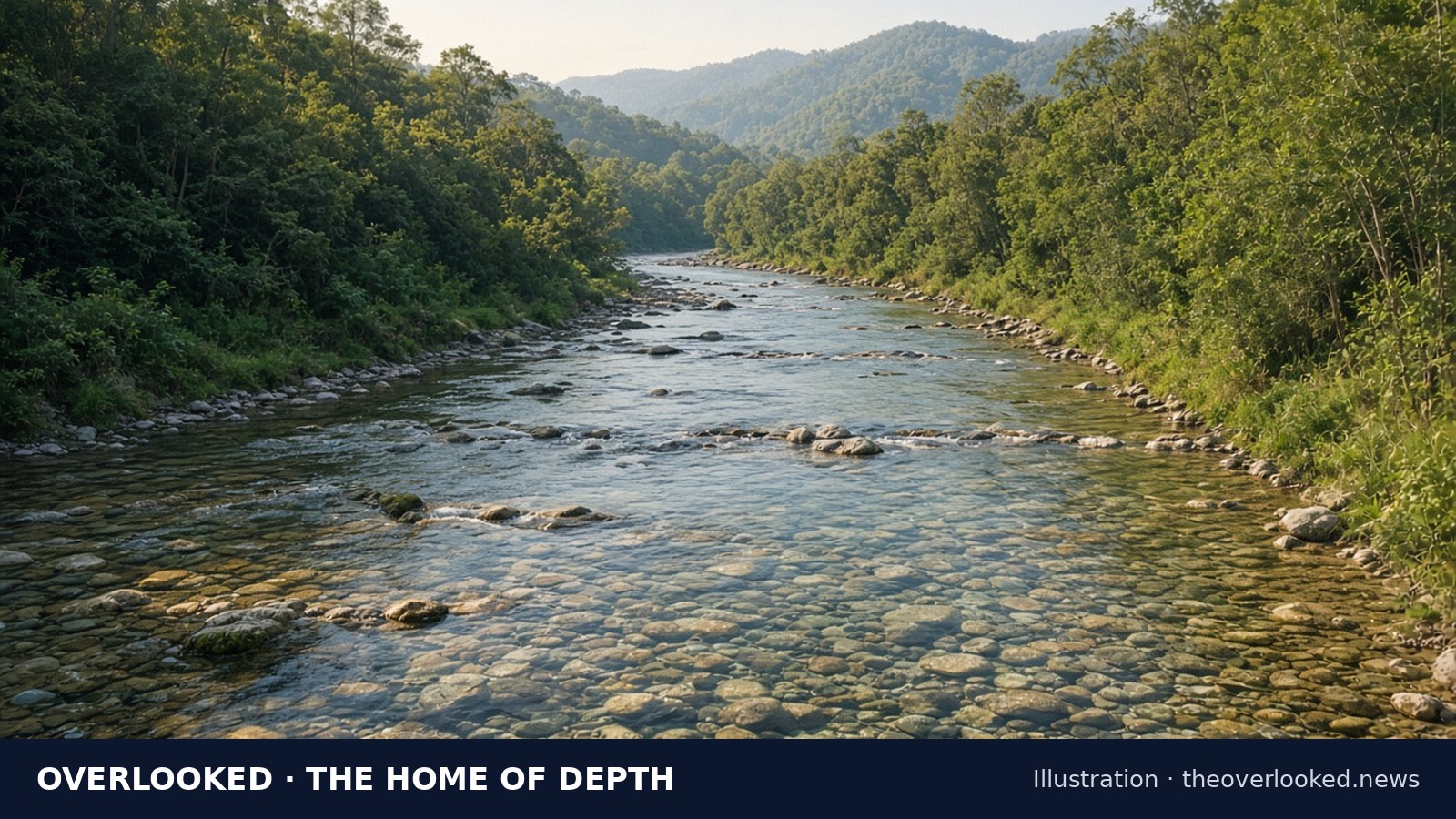
SIBUNDOY, Colombia —
| Score | Meaning | Major U.S. outlets that covered it |
|---|---|---|
| 10 | Fully overlooked ← this story | 0 of 13 outlets |
| 8 | Barely covered | 1 outlet |
| 6, 5 | Lightly covered | 2 outlets (6) · 3 outlets (5) |
| 4, 3 | Covered | 4 outlets (4) · 5 outlets (3) |
| 2, 1, 0 | Widely covered | 6–7 outlets (2) · 8–10 outlets (1) · 11–13 outlets (0) |
Provisional: Search-based provisional check about 7:34-7:42 PM ET, Nov. 18, 2026: all 13 outlets were checked by WebSearch topic and 13-outlet site-batch queries; direct section-page scans found no topic mention at WaPo, WSJ, CNN, Fox, NBC, CBS, ABC, NPR, USA Today (nation page) and Bloomberg, but AP, Reuters and NYT section pages blocked automated fetches, so those three rest on search only. Search-index coverage of the last few hours is incomplete; absence among the 13 is not proof of absence. Coverage found outside the 13: Colprensa via Radio Hoy and Hoy Diario del Magdalena, Veta Madre Review, vLex (court database). Among the 13, search returned only older, different stories listed under related_not_counted; none counted.
Depth
Dig five layers into this story — from what happened to the full picture.
L1What happened
What happened: The court's First Review Chamber, "integrada por la magistrada Natalia Ángel Cabo, quien la preside" — made up of Justice Natalia Ángel Cabo, who presides (our translation) — and Justices Carlos Camargo Assis and Héctor Alfonso Carvajal Londoño, overturned two lower-court rulings from February and March 2025 that had gone against the plaintiffs. Colprensa says the court "También dejó parcialmente sin efectos la resolución del Ministerio del Interior que había descartado la necesidad de ese procedimiento." — also partly voided the Interior Ministry resolution that had ruled out the need for that procedure (our translation).
L2Who’s affected
Who is affected: The plaintiffs are members of two Kamëntsá reserves in Sibundoy and San Francisco, Putumayo, in the territory the court calls the "Waman Luar Tabanok (Sagrado Lugar de Origen) de dicha comunidad: el Valle de Sibundoy." — the community's Sacred Place of Origin, the Sibundoy Valley (our translation). The 19 title holders belong to the "Asociación para la Conservación y Aprovechamiento de Minerales del Territorio del Pueblo Kamëntsá Ftumaijay" (Colprensa). The court's public version replaces the parties' names with fictitious ones, so we do not name the plaintiffs.
L3Why it’s quiet
Why it stayed quiet: The ruling reached the public through a short Colprensa wire item carried by regional Colombian media, nearly three weeks after the decision date. A search-based check of 13 major U.S. outlets found none that had covered it.
L4Deeper impact
Deeper impact: Colprensa says the court asked the two cabildos, the reserves' governing councils, to consider "un espacio de diálogo interno" — a space for internal dialogue (our translation) — before consultation, after which "el Ministerio del Interior, la ANM y Corpoamazonia deberán convocar la consulta previa." — the Interior Ministry, the National Mining Agency and the regional environmental authority Corpoamazonia must convene the prior consultation (our translation). The court's order says consultation must start when the cabildos report the end of that dialogue or "seis (6) meses después de notificada esta sentencia, lo que primero ocurra" — six months after notice of the ruling, whichever comes first (our translation).
L5Full context
Full context: The plaintiffs challenged the mining agency's special reserve area, "la decisión del Ministerio del Interior de declarar improcedente la consulta previa" — the Interior Ministry's decision that prior consultation did not apply (our translation) — and Corpoamazonia's temporary environmental license, Colprensa says. The project involves "la extracción de arenas, gravas y roca de los ríos" — extracting sand, gravel and rock from the rivers (our translation). Colombia's Ministerio Público, the state oversight office, had backed the plaintiffs "pero sin suspender el ejercicio minero por ser este tradicional" — but without suspending the mining because it is traditional (our translation); the court ordered the conditional suspension anyway.
You’ve reached the bottom. Read the original reporting below.
Summary
Colombia's Constitutional Court has ordered a halt to river mining by members of an Indigenous people until the state consults their wider communities. Colprensa reports: "La Corte Constitucional ordenó suspender las actividades de extracción del proyecto minero Balastrera Tamabioy, en los ríos Putumayo y San Francisco" — the Constitutional Court ordered extraction suspended at the Balastrera Tamabioy mining project on the Putumayo and San Francisco rivers (our translation) — pending prior consultation with the Kamëntsá Biyá community of Sibundoy and the Kamëntsá Inga community of San Francisco. The project's title holders "son 19 integrantes de las comunidades" — are 19 members of the communities (our translation).
The ruling, T-356 of 2026, is dated Oct. 30, 2026, in the court's published text. Its core holding: "El hecho de que un proyecto extractivo que afecta a una comunidad étnica sea adelantado por sus propios miembros no exime a las autoridades estatales" — the fact that an extractive project affecting an ethnic community is carried out by its own members does not exempt state authorities (our translation) from guaranteeing prior consultation.
The suspension applies "en caso de que los titulares mineros estén actualmente ejecutando operaciones" — if the title holders are currently carrying out operations (our translation). The court said its latest information was that the holders were not allowed to extract "porque no tenían un Plan de Gestión Social aprobado por la Agencia Nacional de Minería" — because they lacked a social management plan approved by the National Mining Agency (our translation) — but that it did not know the project's exact status.
Original reporting
- Colprensa via Radio Hoy (in Spanish)Corte ordena suspender extracción minera en territorio indígena de Putumayo (Court orders mining extraction in Indigenous territory in Putumayo suspended; our translation)Nov 18, 2026 ↗
- Constitutional Court of Colombia (in Spanish)Sentencia T-356 de 2026, expediente T-11.074.329 (Ruling T-356 of 2026, case file T-11.074.329; our translation)Oct 30, 2026 ↗
Status history (2 events, ET)
- O-Score check: 10 (Fully overlooked) · of 13 outlets counted
- Published
Story timeline
Drag to see how this story moved: when we published, when big outlets had it, and each O-Score check. From our stored check log; times ET.
PublishedUpdates 0Outlets by our date 0Later pickups 0Checks 1
No later pickups logged so far.
All 2 events as a list
- 7:42 PM ET, Nov 18, 2026 · O-Score check: of 13 outlets had it (score 10)
- 9:19 PM ET, Nov 18, 2026 · OVERLOOKED published this story
Trace it: 15 of 15 sourced claims on this page can be traced to the cited source. 15 of 15 have a saved copy of the original report.
ColombiaPutumayoIndigenous rightsPrior consultationMiningCourts
This is an OVERLOOKED summary of the reporting above. Facts and figures come from the linked sources. Everything here is a fact unless it is labelled otherwise. Support this work.
Alerts Get stories like this your way: email, a daily PDF paper, notifications, RSS, or alerts on topics you follow. Choose how →