

Oceania·Cook Islands
Cook Islands growers see taro and leafy greens suffer as an El Niño dry spell bites
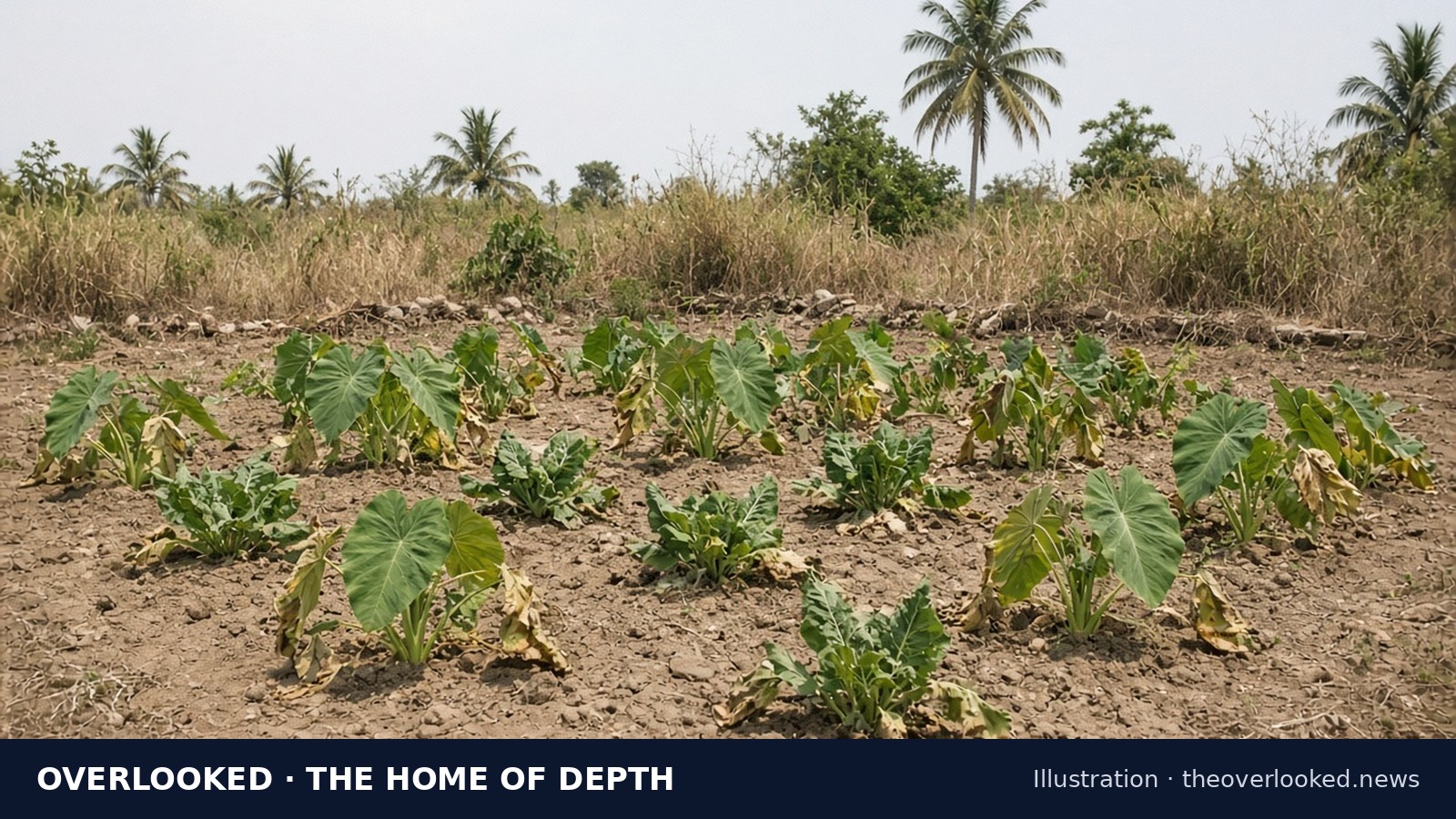
RAROTONGA, Cook Islands —
| Score | Meaning | Major U.S. outlets that covered it |
|---|---|---|
| 10 | Fully overlooked ← this story | 0 of 13 outlets |
| 8 | Barely covered | 1 outlet |
| 6, 5 | Lightly covered | 2 outlets (6) · 3 outlets (5) |
| 4, 3 | Covered | 4 outlets (4) · 5 outlets (3) |
| 2, 1, 0 | Widely covered | 6–7 outlets (2) · 8–10 outlets (1) · 11–13 outlets (0) |
Provisional: Search-based provisional check, 2026-11-11T22:04:29-05:00 to 2026-11-11T22:06:25-05:00 (ET): Bing News RSS site:+keyword queries run individually per outlet (3 keyword variants per outlet domain; ABC on abcnews.go.com and abcnews.com; 42 queries per story). All 42 queries returned HTTP 200 and parsed as RSS. Candidate headlines were regex-filtered then editor-read against a 40-day window (Oct. 2–Nov. 11, 2026). None of the 13 outlet sites was opened live outlet by outlet, and no outlet's own site search was used. Counts outlets, not origins. Not proof of absence. Not a locked final score.
Why this is in the archive: We published this on Nov 11, 2026. Regular stories move to the archive 7 days after publishing, so it was moved at 10:42 PM ET on Nov 18, 2026. It was archived for age, not coverage; its O-Score (10) is unchanged. (Not yet logged; the daily recheck will record it.)
Depth
Dig five layers into this story — from what happened to the full picture.
L1What happened
SINGLE-SOURCE: This story relies on one report, by Shalveen Chand for Cook Islands News, republished by RNZ. An El Niño dry spell is straining Cook Islands farming, “with staple crops such as taro and green leafy vegetables among the first to suffer,” the report says. Te Tango Enua growers' association president Danny Mataroa said “Growers are actually turning taps off” and warned: “This could eventually lead to higher prices and more reliance on imported produce.” Rarotonga's water authority reported production between 45 and 55 percent of capacity through October.
L2Who’s affected
Who is affected: Andy Kirkwood of Natura Kuki Airani (NKA), the Cook Islands organic grower community, said: “The farms closer to the coast are more affected compared to the ones inland.” He added: “The leafy vegetables would be more affected. Tree top produces not so much now but if the dry spell continues, then these would be affected as well.”
L3Why it’s quiet
Water supply: According to the report, “Rarotonga's water authority To Tatou Vai (TTV) reported that water production fluctuated between 45 percent and 55 percent of capacity throughout October.” It adds: “Recent rainfall from Tropical Cyclone Wati brought production closer to 60 percent, but officials stress the relief is temporary.” TTV's William Tuivaga said: “The good news is that there is no need to panic. However, now is the time to strengthen water conservation measures across all sectors.”
L4Deeper impact
The outlook: The 2026/27 Seasonal Climate and Ocean Outlook “highlights an increased risk of below-normal rainfall and drought in the southern Cook Islands - including Rarotonga,” the report says. Meteorological Service director Maara Vaiimene warned that “the full severity of reduced rainfall might not become apparent until the first or second quarter of 2027.”
L5Full context
About the sourcing: Cook Islands News published the story on Wednesday, Nov. 11, 2026, and RNZ republished it, with additional reporting credited to Melina Etches. These are one report, not two independent sources. Overlooked has not independently confirmed the crop or harvest conditions or the water-production figures.
You’ve reached the bottom. Read the original reporting below.
Summary
SINGLE-SOURCE: This story relies on one report, by Shalveen Chand for Cook Islands News, republished by RNZ. An El Niño dry spell is straining Cook Islands farming, “with staple crops such as taro and green leafy vegetables among the first to suffer,” the report says. Te Tango Enua growers' association president Danny Mataroa said “Growers are actually turning taps off” and warned: “This could eventually lead to higher prices and more reliance on imported produce.” Rarotonga's water authority reported production between 45 and 55 percent of capacity through October.
Original reporting
Status history (3 events, ET)
- O-Score recheck: 10 (Fully overlooked) · of 13 outlets counted
- Published
- Moved to the archive (7-day rule) · not yet logged
Story timeline
Drag to see how this story moved: when we published, when big outlets had it, and each O-Score check. From our stored check log; times ET.
PublishedUpdates 0Outlets by our date 0Later pickups 0Checks 1
No later pickups logged so far.
All 2 events as a list
- 10:06 PM ET, Nov 11, 2026 · O-Score recheck: no new outlets found
- 10:42 PM ET, Nov 11, 2026 · OVERLOOKED published this story
Trace it: 33 of 33 sourced claims on this page can be traced to the cited source. 33 of 33 have a saved copy of the original report.
Cook IslandsEl NiñoDroughtAgricultureWater
This is an OVERLOOKED summary of the reporting above. Facts and figures come from the linked sources. Everything here is a fact unless it is labelled otherwise. Support this work.
Alerts Get stories like this your way: email, a daily PDF paper, notifications, RSS, or alerts on topics you follow. Choose how →