Asia·Malaysia
Indigenous group demands halt to drilling for a high-altitude training centre on Malaysia's sacred Mount Kinabalu
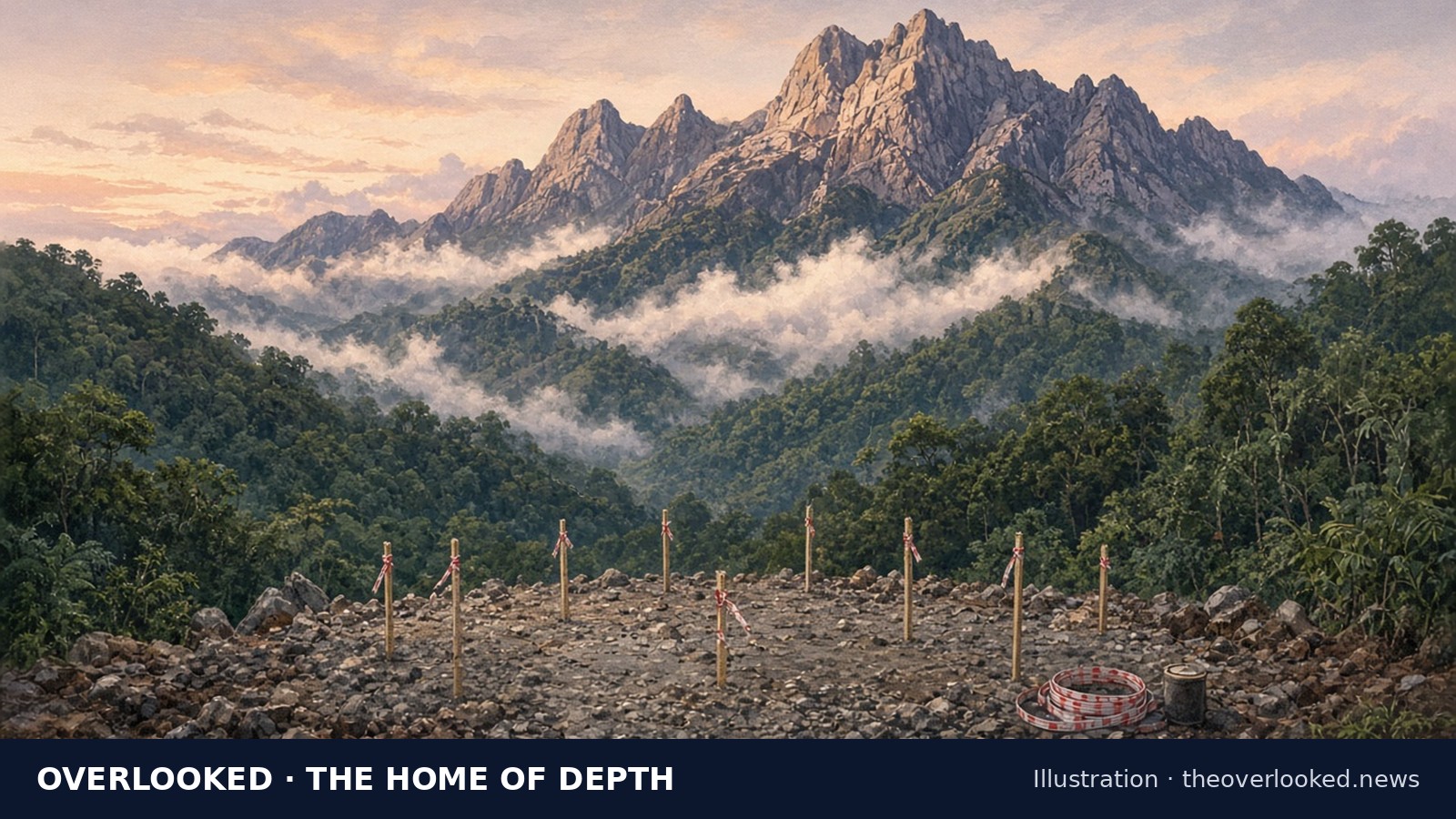
KOTA KINABALU, Malaysia —
| Score | Meaning | Major U.S. outlets that covered it |
|---|---|---|
| 10 | Fully overlooked ← this story | 0 of 13 outlets |
| 8 | Barely covered | 1 outlet |
| 6, 5 | Lightly covered | 2 outlets (6) · 3 outlets (5) |
| 4, 3 | Covered | 4 outlets (4) · 5 outlets (3) |
| 2, 1, 0 | Widely covered | 6–7 outlets (2) · 8–10 outlets (1) · 11–13 outlets (0) |
Provisional: Google News (5 term variants for AP, Reuters and The Washington Post; 3 for the others) and Bing News (5 variants, outlet domain only) were both used. AP, Reuters and CBS News block direct site search, and the other 10 outlets’ site search only loads in a live browser. A single search engine can miss articles, so this score may go down on recheck.
Depth
Dig five layers into this story — from what happened to the full picture.
L1What happened
What happened: DIO is concerned that the "High Altitude Training Centre (HATC) tourism project at the Sayat-Sayat area of Mount Kinabalu could violate native sacred beliefs" (The Star). "In a statement on Tuesday (Nov 3), Ambrose, known locally as Atama Katama," said "ongoing drilling and structural works at the summit zone, traditionally known as Aki Nabalu, are an intrusion into a sacred indigenous landscape" (The Star). DIO "today called for all construction, drilling and installation work at the site to stop" (Malay Mail).
L2Who’s affected
Who's affected: Andrew Ambrose, "United Nations permanent representative for the Dayaks of Malaysia, Indonesia and Brunei," said "using an administrative advisory council to bypass grassroots consent undermined the legal traditions of the Momogun and Kadazandusun peoples" (The Star). "Aki Nabalu is not a real estate asset or a commercial playground for state monetisation," he said (The Star).
L3Why it’s quiet
Why it stayed quiet: Analysis: It is a state-level dispute in Sabah. "The controversy surfaced around October 30 after photographs showing structures and apparent drilling activities near Sayat-Sayat circulated on social media" (Malay Mail).
L4Deeper impact
Deeper impact: DIO says the work "violated indigenous customary laws protected under the UN Declaration on the Rights of Indigenous Peoples (UNDRIP), he said" (The Star). "It also called for an independent environmental audit, including an assessment of potential impacts on water catchments and waste management systems," and may raise the issue with bodies "including the UN Permanent Forum on Indigenous Issues and the Unesco Global Geoparks Network" (The Star).
L5Full context
Full context: Minister Jafry Ariffin said "the development uses lightweight, prefabricated and modular building materials designed to minimise disturbance to the environment and avoid the use of heavy machinery" (The Star), and: "We will not compromise the ecological integrity of Mount Kinabalu in the pursuit of tourism development" (The Star, Nov 2). "HATC was originally proposed under the Kinabalu Park Development Plan in 2015, but its implementation was deferred following the earthquake" (The Star, Nov 2). The centre is meant for climbers preparing for peaks "including Mount Kilimanjaro, Aconcagua and Mount Everest"; "Mount Kinabalu, also known as Aki Nabalu, is Sabah's highest peak at 4,095 metres," and "Kinabalu Park was inscribed as a Unesco World Heritage Site in 2000" (Malay Mail).
You’ve reached the bottom. Read the original reporting below.
Original reporting
Status history (2 events, ET)
- O-Score check: 10 (Fully overlooked) · 0 of 13 outlets counted
- Published
Story timeline
Drag to see how this story moved: when we published, when big outlets had it, and each O-Score check. From our stored check log; times ET.
PublishedUpdates 0Outlets by our date 0Later pickups 0Checks 1
No later pickups logged so far.
All 2 events as a list
- 2:16 PM ET, Nov 3, 2026 · O-Score check: 0 of 13 outlets had it (score 10)
- 2:18 PM ET, Nov 3, 2026 · OVERLOOKED published this story
Trace it: 5 of 5 sourced claims on this page can be traced to a saved copy of the original report.
Indigenous RightsSacred SitesTourismMalaysia
This is an OVERLOOKED summary of the reporting above. Facts and figures come from the linked sources. Everything here is a fact unless it is labelled otherwise. Support this work.
Alerts Get stories like this your way: email, a daily PDF paper, notifications, RSS, or alerts on topics you follow. Choose how →